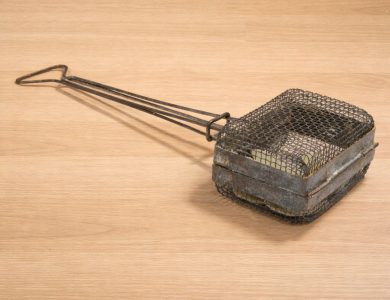
What’s the name of this tool AND did you ever use one?
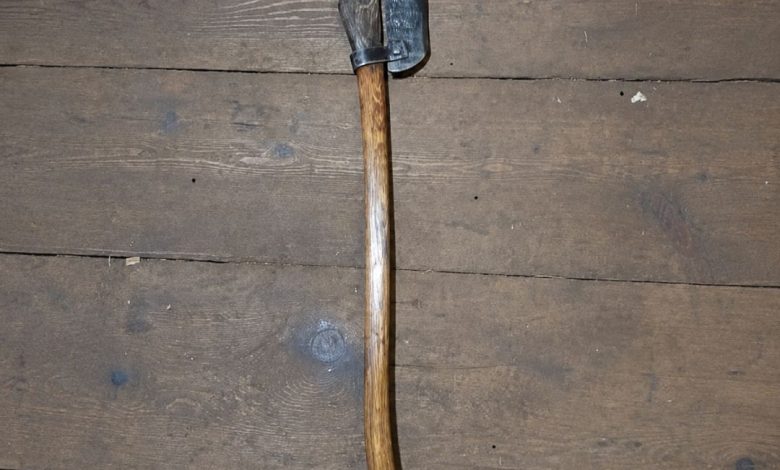
The tool shown is commonly called a brush axe, although it may also be known as a bush axe, clearing axe, or slasher. It combines a long wooden handle with a large, curved steel blade designed for cutting through thick vegetation.
When Did the Brush Axe Appear?
Brush-clearing tools with curved blades existed in different forms long before modern machinery. However, the brush axe became especially common in rural America during the late 19th and early 20th centuries, when farmers, ranchers, road crews, and forestry workers needed an efficient way to clear land by hand.
There is no single universally recognized inventor or exact year of invention. Instead, the tool developed from older agricultural cutting implements and was gradually adapted for American farming and forestry work.
What Was It Used For?
The brush axe was primarily designed to clear:
- Dense underbrush
- Woody weeds and invasive plants
- Vines, briars, and heavy shrubs
- Saplings and small trees
- Overgrown trails, fence lines, and field edges
Its operation combined the chopping force of an axe with the broad swinging motion of a machete. The user swept or chopped the blade through vegetation, allowing the curved cutting edge to catch and slice tough stems.
Why Is the Blade Curved?
The hook-shaped blade is the most distinctive feature of the brush axe. Its curve helps hold branches and stems against the cutting edge rather than allowing them to slide away during a swing.
The long handle also provides additional reach and leverage. Combined with the weight of the steel head, it allows the user to generate considerable cutting force without standing directly beside thorny or tangled vegetation.
However, the claim that it required “minimal effort” should be treated cautiously. A brush axe was effective, but using one for hours demanded strength, coordination, proper technique, and physical endurance.
An Essential Tool Before Power Equipment
Before chainsaws, powered brush cutters, and modern landscaping machines became widely available, brush axes were valuable tools for maintaining farms, forests, roadsides, and rural properties.
They became popular because they were:
- Durable and relatively inexpensive
- Easy to carry into remote areas
- Simple to sharpen and repair
- Independent of fuel or electricity
A well-made brush axe could remain useful for decades when properly maintained.
Are Brush Axes Still Used Today?
Modern power tools have replaced brush axes for much large-scale clearing work, but similar hand tools are still used where machinery is impractical, too expensive, or undesirable.
Vintage examples are also collected for their historic craftsmanship, unusual blade designs, and connection to early American agricultural life. Their value depends on factors such as the manufacturer, age, condition, originality of the handle, and presence of identifiable markings.
How Should a Vintage Brush Axe Be Preserved?
To protect an old brush axe:
- Keep the steel blade clean and lightly oiled to prevent rust.
- Sharpen the cutting edge carefully without removing excessive metal.
- Check the head and handle connection for looseness.
- Treat a dry wooden handle with an appropriate wood-preserving oil, such as boiled linseed oil, while following the product’s fire-safety instructions.
- Store the tool in a dry location and cover the blade when possible.
Because the blade can be extremely sharp and the long handle produces substantial force, it should be handled carefully and kept away from children.
A Reminder of Early Rural Craftsmanship
The vintage brush axe represents a period when land was often cleared through demanding manual labor. Its curved steel blade, long wooden handle, and straightforward construction made it a practical tool for generations of outdoor workers.
Today, it remains both a functional cutting implement and a striking symbol of American farming, forestry, resourcefulness, and traditional hand-tool design.