Did you ever have a mood ring?
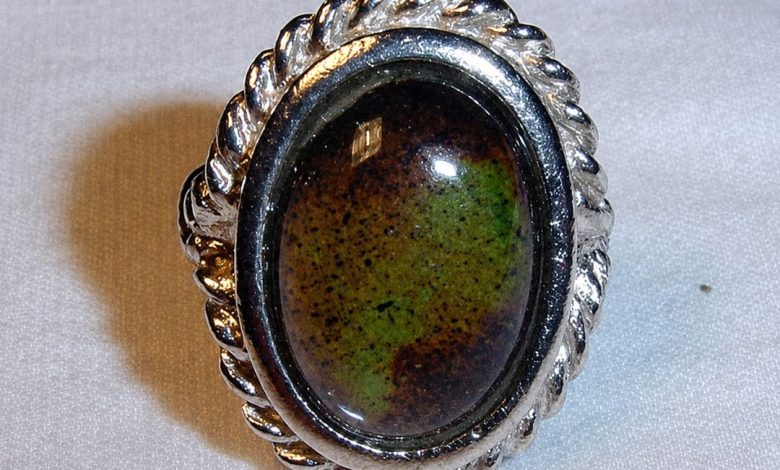
The item in the photo is a mood ring, a type of novelty jewelry known for its color-changing “stone.” At first glance, it looks like a decorative ring with a large oval gem, but its main appeal is that the center changes color when it becomes warmer or cooler.
Mood rings became popular in the United States in 1975, during the height of the 1970s fashion era. They are commonly associated with Josh Reynolds and Maris Ambats, who helped introduce color-changing mood rings to American stores that year. The rings quickly became a major fashion trend and a conversation piece.
The purpose of a mood ring is mostly fashion and fun. It was marketed as jewelry that could “show” a person’s mood. For example, some color charts claimed that blue meant calm, green meant mixed emotions, and darker colors meant stress. However, this should be understood as a novelty idea, not a scientific mood test.
The ring works because it contains thermotropic liquid crystals, also called a thermochromic element. These materials react to temperature changes. When the wearer’s finger is warmer or cooler, the crystals reflect light differently, making the ring appear to change color.
In simple terms, a mood ring does not truly read emotions directly. It changes color based on heat, body temperature, room temperature, and blood flow in the finger. Since emotions can sometimes affect body temperature slightly, people connected the color changes with feelings, but the ring is better described as a temperature-sensitive fashion accessory.
Today, mood rings are remembered as one of the most recognizable pieces of 1970s pop culture. They are still sold as retro jewelry, gifts, and nostalgic accessories for people who enjoy vintage-style items with a playful scientific twist.