We called it “three on the tree”…If you knew how to drive one, you’re badass
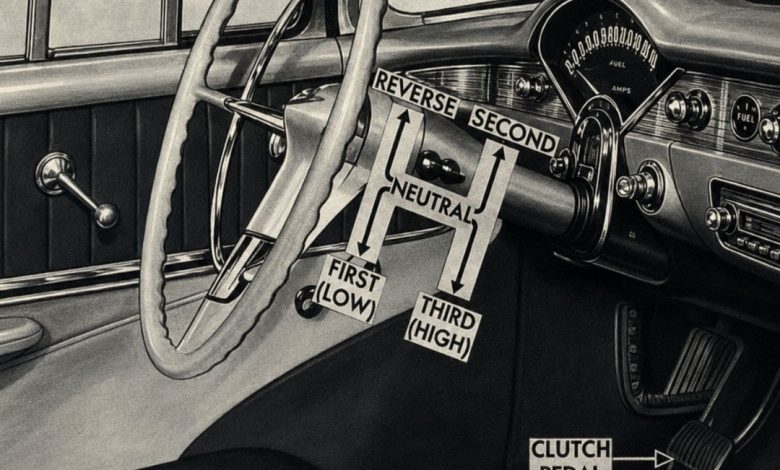
The phrase “three on the tree” refers to a three-speed manual transmission with the gearshift lever mounted on the steering column instead of on the floor. In old American slang, the steering column was sometimes called the “tree,” so “three on the tree” simply meant three forward gears on the steering column.
This setup became especially common in the United States during the 1940s and 1950s, when many American cars and trucks used simple three-speed manual transmissions. It remained familiar through the 1960s and 1970s, especially in basic family cars, work trucks, and lower-cost models.
How did it work?
A driver used the clutch pedal with the left foot and moved the shifter on the steering column into different positions for First, Second, Third, Reverse, and Neutral. The pattern could feel unusual to someone used to a modern floor shifter, because the movement happened beside the steering wheel rather than between the seats.
The main purpose of “three on the tree” was practicality. It helped keep the front floor area clear, which made room for a bench seat so three people could sit across the front of the car. It was also a simple and affordable design for everyday transportation before automatic transmissions became dominant.
By the late 1970s, the column-shift manual was disappearing from American passenger cars. According to Autoweek, the 1979 Chevrolet Nova and its GM relatives were among the last U.S. passenger cars available with this setup. Trucks kept the idea alive longer, but by the 1980s it had become rare.
Why do people remember it so fondly?
Driving a “three on the tree” required timing, feel, and coordination. You had to manage the clutch, engine speed, and shifter position smoothly. That is why older drivers often joke that if you could drive one, you had real old-school driving skill.
A small truth behind the nostalgia: “three on the tree” was not faster or more advanced than modern transmissions. It was loved because it was simple, mechanical, and connected the driver directly to the car. For many Americans, it brings back memories of parents’ cars, farm trucks, first driving lessons, and a time when basic transportation felt more hands-on.
In short, “three on the tree” was a steering-column-mounted three-speed manual transmission, popular in mid-20th-century American cars and trucks. Today, it is mostly a nostalgic symbol of classic driving skill and old American car culture.